PT KORA PRIMA ABADI · INTEGRATED COCONUT PROCESSING · INDONESIA

EN 中文 عربي ES 한국어

Pyrolysis at the source · Our own workshops · Indonesia

The whole coconut,
reimagined.

Indonesia grows more coconuts than almost any country on earth — and too much of that value leaves as raw commodity. Kora was built to change that at the source: coconut charcoal, edible and smoked copra, coconut vinegar and bioleather, made in our own workshops across Java and Sulawesi — with briquettes pressed in-house. Export and domestic; L/C, T/T or escrow-protected payment.

One coconutSecured at origin
Four raw streamsKernel · water · shell · husk (our fuel)
Eleven product linesAll made in our own workshops
Global marketsExport & domestic · FOB / CIF

What we manufacture

One coconut. Multiple value streams.

Everything we sell, we make. The core of our export book: pyrolysis-made coconut shell charcoal (grades A and B), fine charcoal powder, and biochar-grade char residues for soil application, edible and smoked copra (grades A and B each), naturally fermented coconut vinegar, and coconut bioleather. From the charcoal, our own facility also presses shisha, BBQ, hexa and pillow briquettes in grades A–C — custom moldings for orders that meet MOQ on a long-term contract.

Don't see your exact spec? We'll develop it with you.

Tell us the grade, molding, formulation or material you need. Our team runs feasibility, sampling and pilot batches in our own workshops as a commissioned development — so your spec is proven on the line before you commit to volume.

Discuss a custom development

How we operate

Our workshops, built at the source.

Most exporters buy finished product from whoever happens to be producing. Kora owns its workshops inside Indonesia's producing regions, where copra and coconut vinegar are made and shell is pyrolyzed into charcoal at the source, shipped from the nearest port. Briquettes are pressed at our own facility. Nothing is outsourced or re-labeled: what you receive was made by Kora.

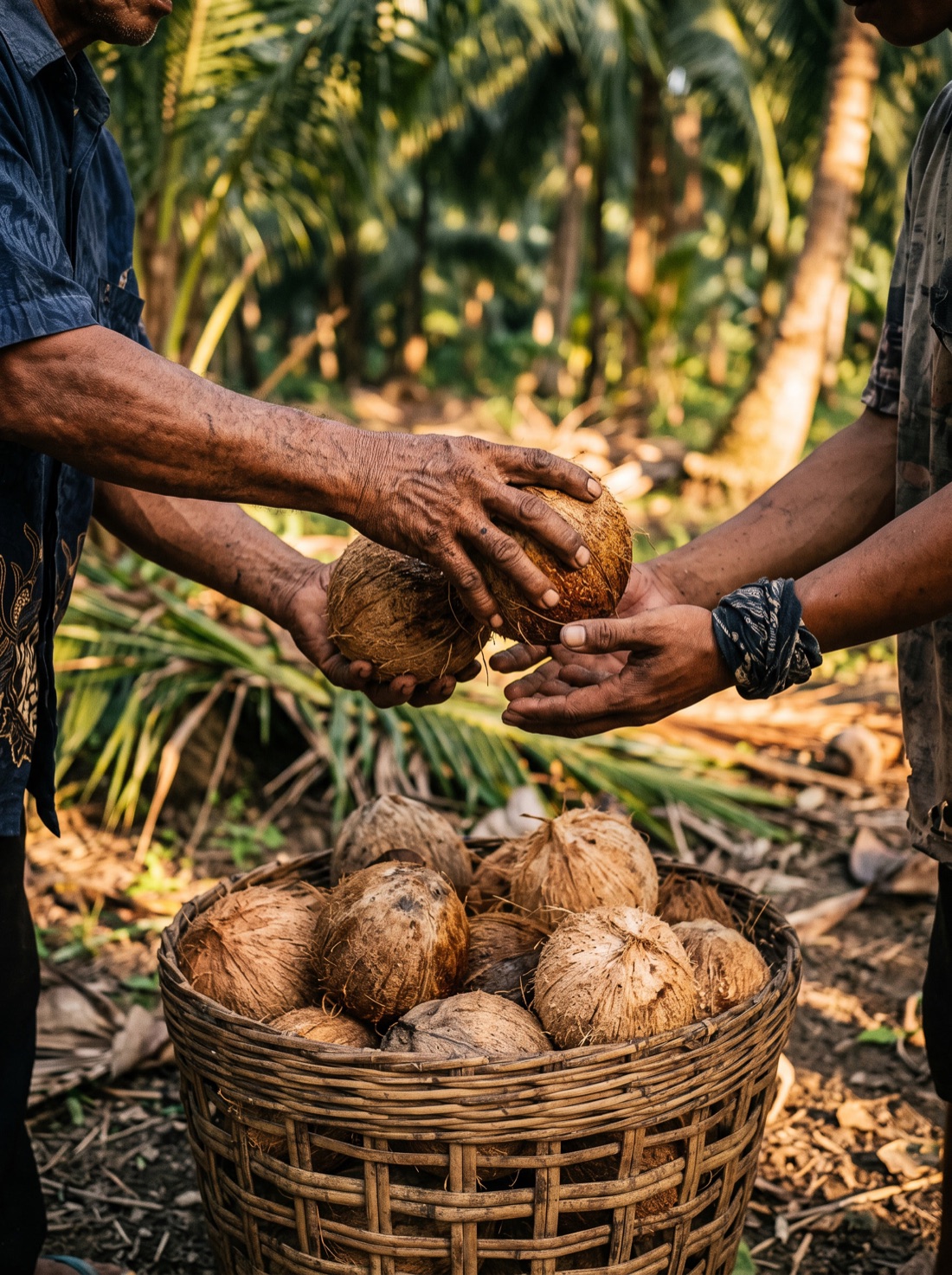
A farmer's hands passing freshly dehusked coconuts to a buyer over a full basket
01Bought close to the tree

Whole coconuts selected mature — denser shell, higher-oil kernel — from the growing communities around each workshop.

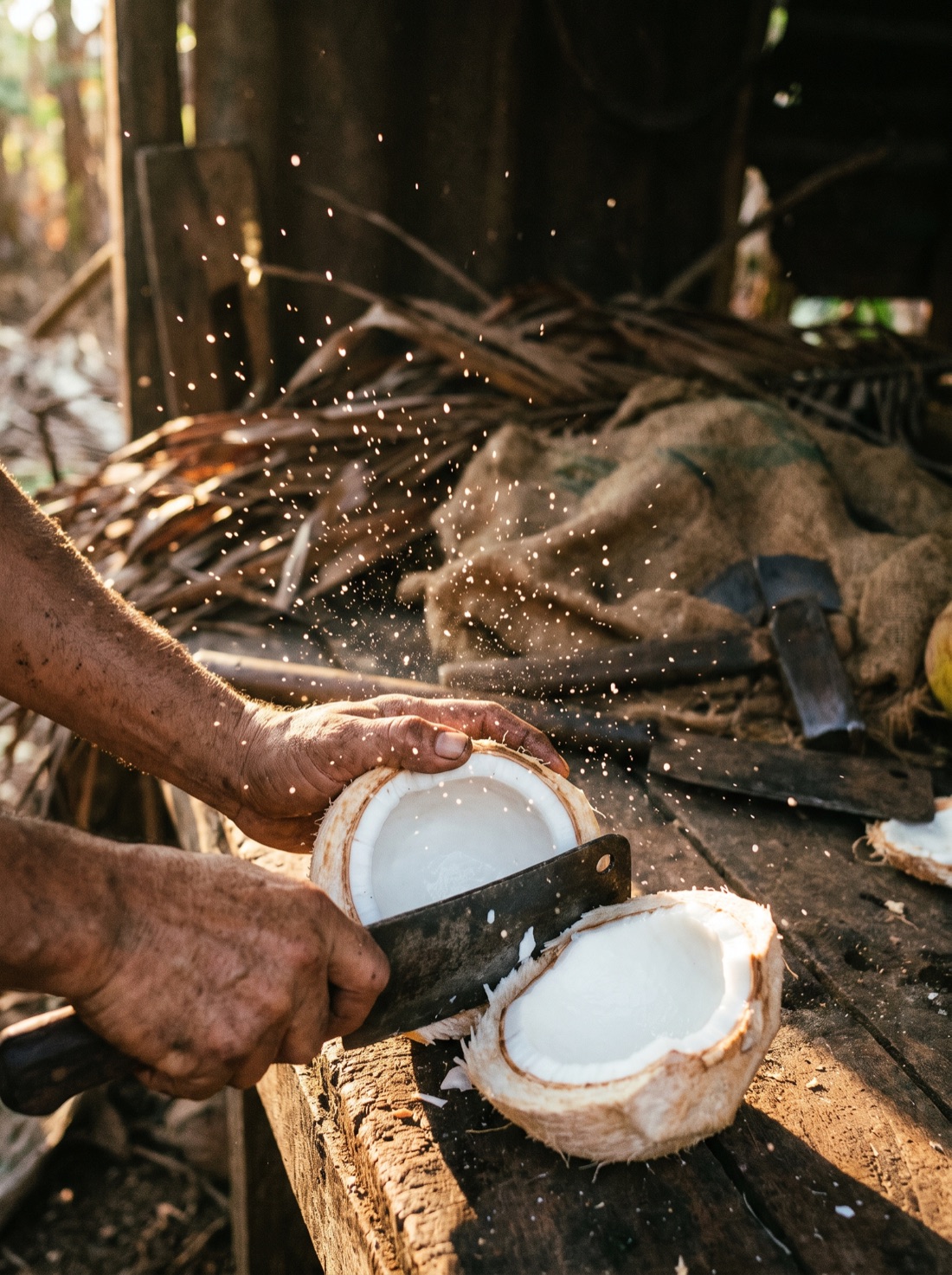
Hands splitting a coconut, white kernel revealed
02Split at the workshop

Every coconut is broken down on the spot, close to harvest — kernel, water and shell, nothing set aside.

03Pyrolyzed, dried, fermented

Shell becomes A/B charcoal by controlled pyrolysis — the same process behind biochar. Kernel cures into copra; water ferments into vinegar.

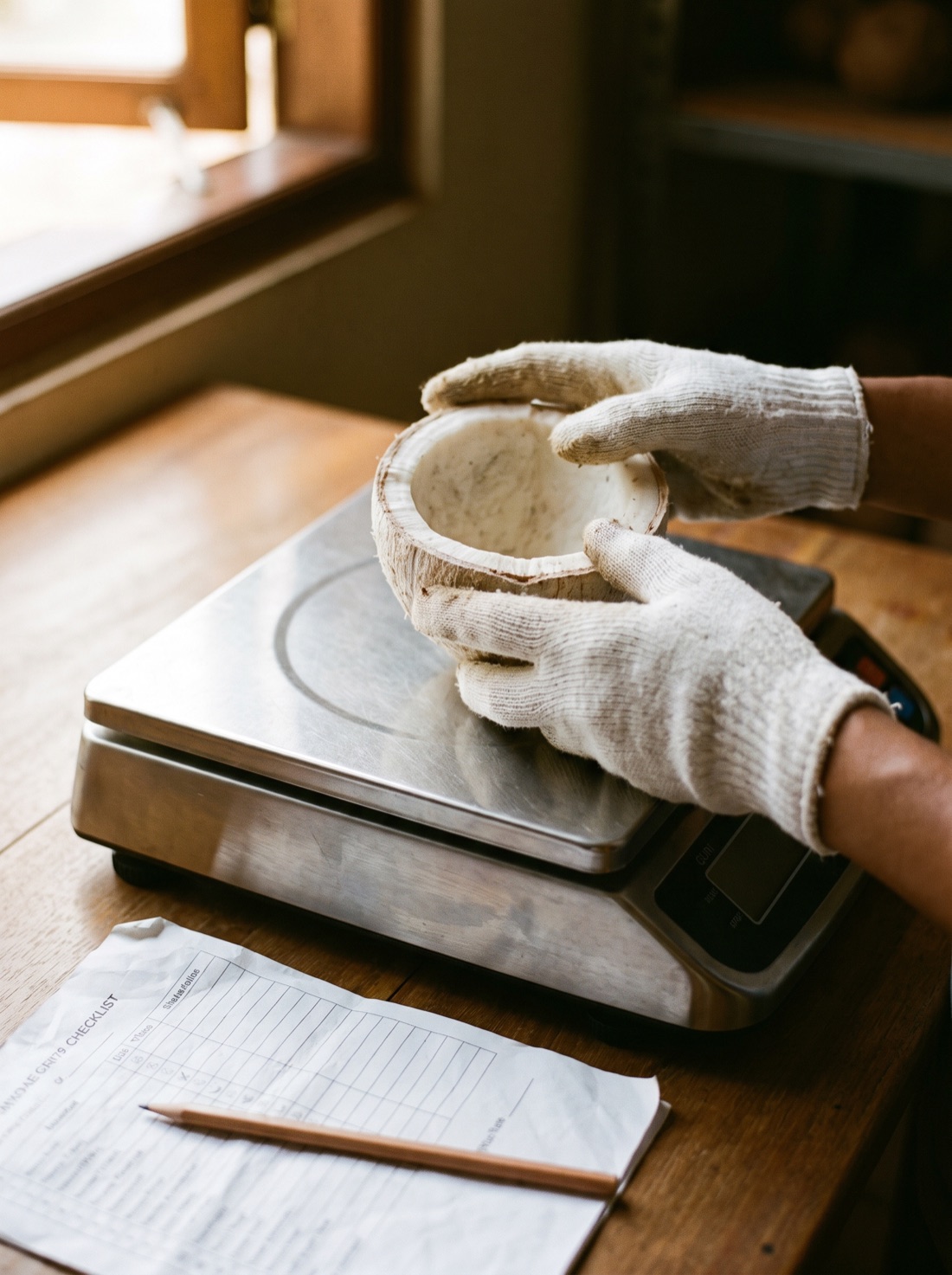
Gloved hands inspecting dried copra over a weighing scale
04Checked before loading

Every lot verified to spec with a certificate of analysis; third-party inspection welcome.

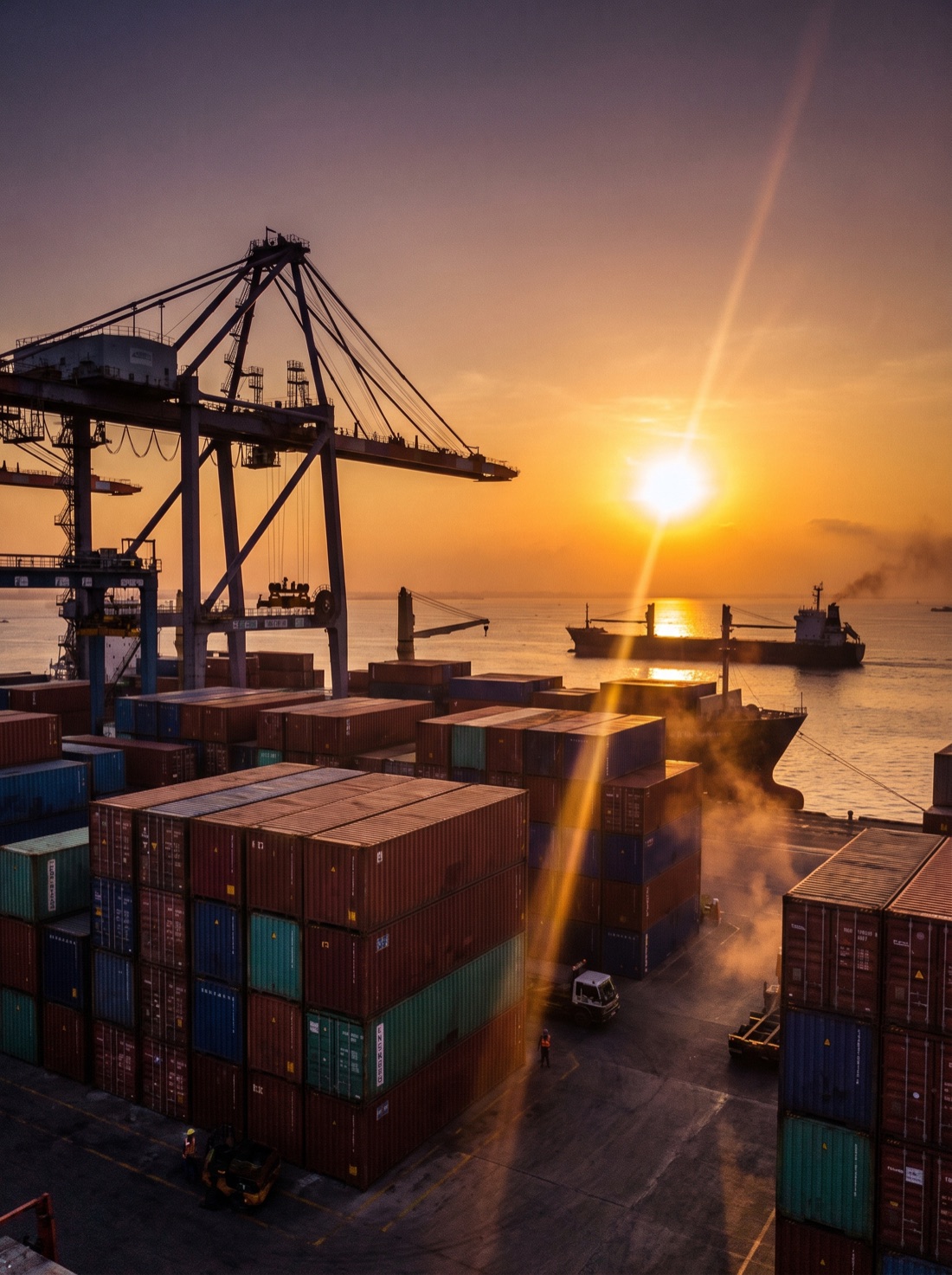
Shipping containers and cranes at an Indonesian port at golden hour
05Shipped, export or domestic

From the port nearest the producing workshop — lead times stated at quotation and held, every lot traceable.

This journey runs today through four Kora workshops across Java and Sulawesi, with briquettes pressed at our own facility — one standard in every workshop, and more to come across Indonesia's coconut belt.

Every shipment: certificate of analysis · phytosanitary certificate · certificate of origin · packing list · bill of lading. Third-party inspection (Carsurin, SGS, Sucofindo, Cotecna) welcome.

Why Kora

Indonesian supply. Global standards.

Global buyers need Indonesian-origin product with consistent specification, quality and supply. Four things you can check before signing: where it's made, what paperwork already exists, who you're actually talking to, and how you're allowed to pay.

01

Four workshops of our own

Two in West Java, one in East Java and one in Central Sulawesi. Exact locations are shared at contract, and buyers are welcome to visit by appointment.

02

Complete paperwork, before you ask

HS code, full specification and structured trade data are prepared for every product in advance — nothing is assembled from scratch after your inquiry.

03

Traceable, farm to buyer

Every lot is recorded in our in-house software — from the farmer and supplier we bought it from to the buyer we shipped it to.

04

Payment matched to you

Irrevocable L/C at sight, T/T or escrow — and documentary collection (D/P) once a trade history is established. We adapt to your procurement process, prudently.

How we work

Inquiry to bill of lading, in five steps.

  1. 01

    Inquiry & spec

    State product, volume, destination port and Incoterm preference. We acknowledge within two business days.

  2. 02

    Offer & sample

    A firm quotation follows, with samples couriered against written specifications for your approval — sample freight on the buyer's account.

  3. 03

    Contract & payment

    Terms fixed on Incoterm, lead time and payment: irrevocable L/C at sight, T/T with deposit, or escrow. First orders ship on secured payment; terms grow with trade history.

  4. 04

    QC & loading

    Production begins once payment security is in place. Goods are verified at origin and loaded to the agreed specification.

  5. 05

    Docs & shipment

    Complete export documentation is released under the agreed payment terms.

Buyer assurance

Multiple payment methods accepted

Irrevocable L/C at sight, bank transfer (T/T), or escrow via a trade platform — with documentary collection (D/P) available to established buyers. Terms matched to your order size and trade history.

Independent inspection welcome

Appoint Carsurin, SGS, Sucofindo or Cotecna for pre-shipment inspection at your option.

Company documents on request

NIB, deed of establishment, NPWP and bank reference available to buyers for compliance review.

Shipping ex Tanjung Priok (Jakarta), Tanjung Perak (Surabaya) or Bitung (North Sulawesi) — port matched to your product and destination.

The Kora model

Secure the supply. Improve the processing. Build products the world wants to buy.

Sustainability

Nothing wasted.

Sustainability at Kora is not a report we publish — it is built into how we work.

Here is our story.

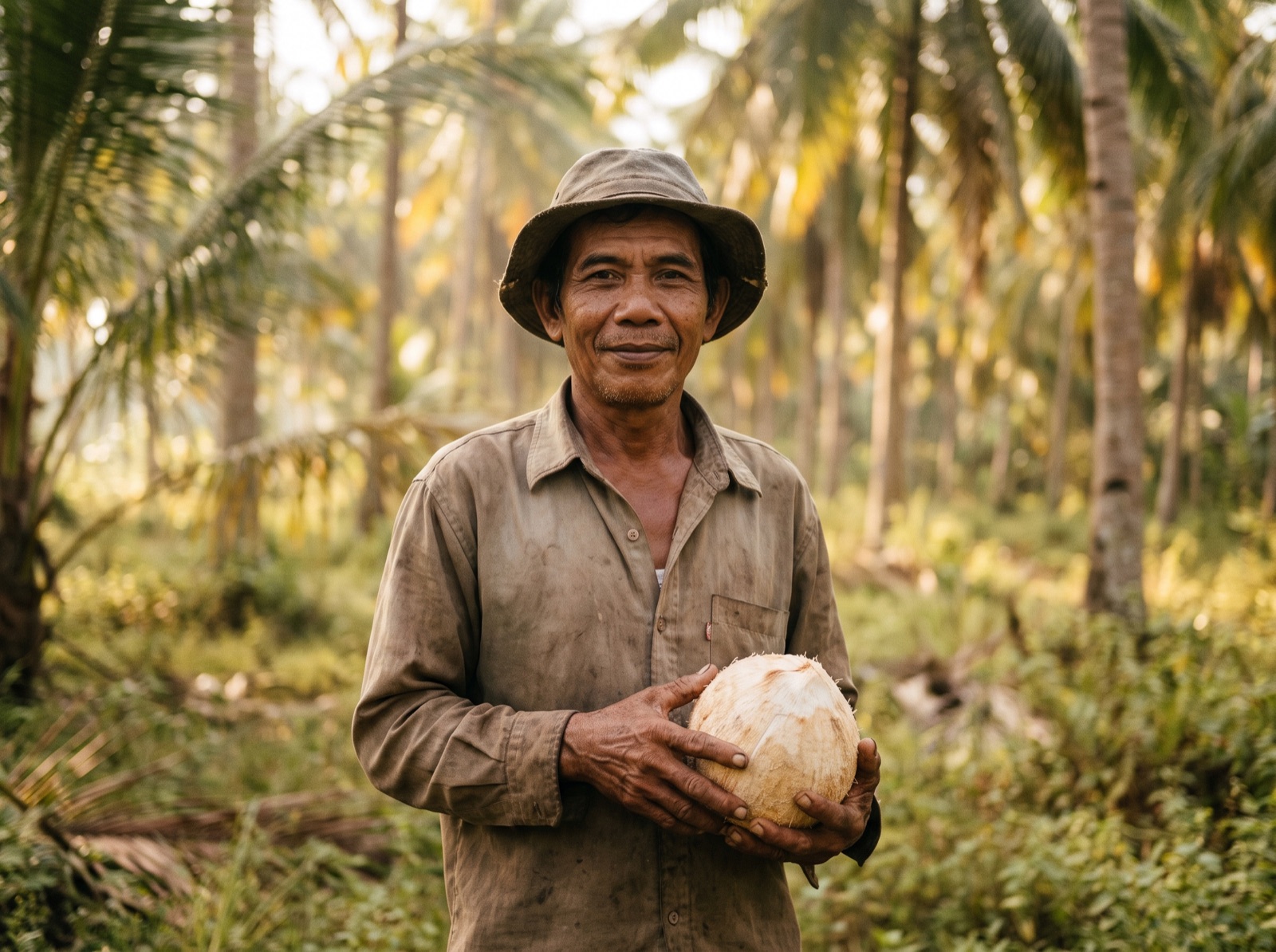
Indonesian coconut farmer holding a freshly dehusked coconut in his plantation

It starts with a farmer and a tree.

Millions of palms, tended by smallholder families — and for generations, the value has left the village in someone else's truck.

So we built the workshop where the trees are.

Bought close to the tree, processed in the village, run by people from the villages nearby. The value stays where the coconut grows.
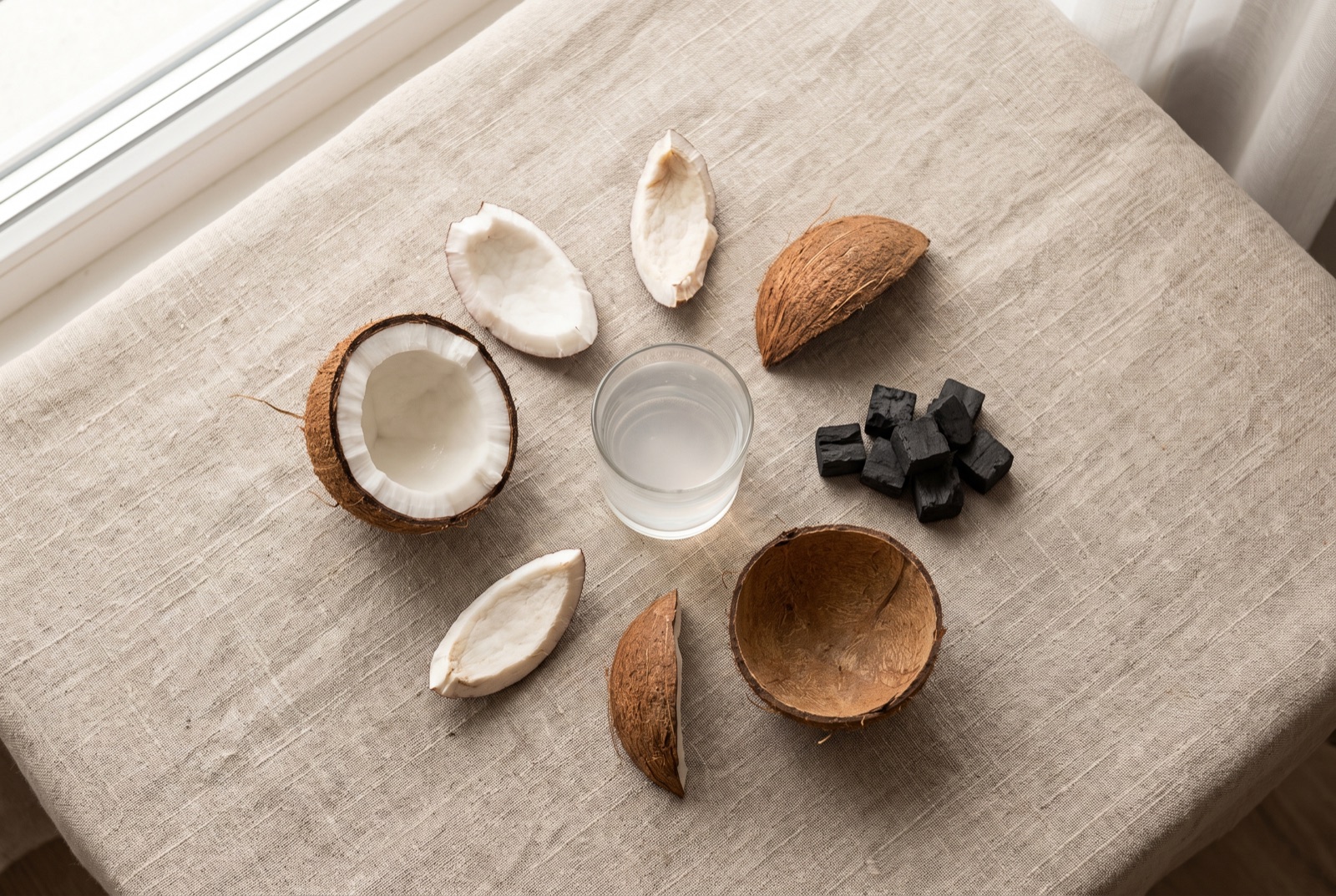
A coconut deconstructed into kernel, copra, water, shell and charcoal on linen

Then we use every last piece.

Kernel to copra. Water to vinegar — and a leather no animal was raised for. Shell to charcoal that spares a forest. Even the husk works: it fires the kilns and dryers that make the rest. Nothing leaves as waste.
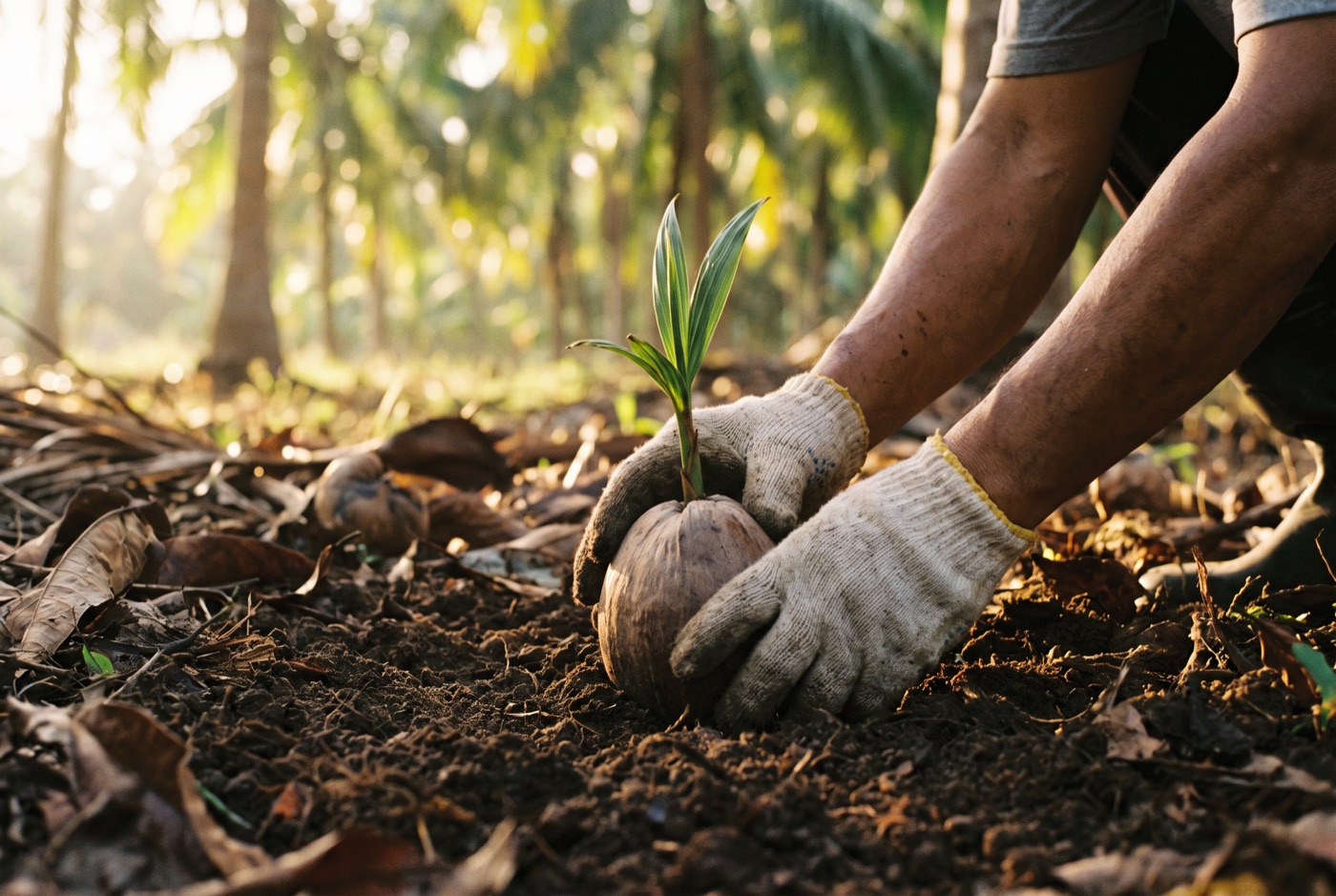
Hands planting a sprouting coconut seedling in dark soil

This is bigger than one order.

Long-term contracts mean steadier income for the farmers behind them — and bring us closer to buying direct from every farmer we work with. Buy from Kora, and your supply chain becomes part of this story — come and see it in Bogor.
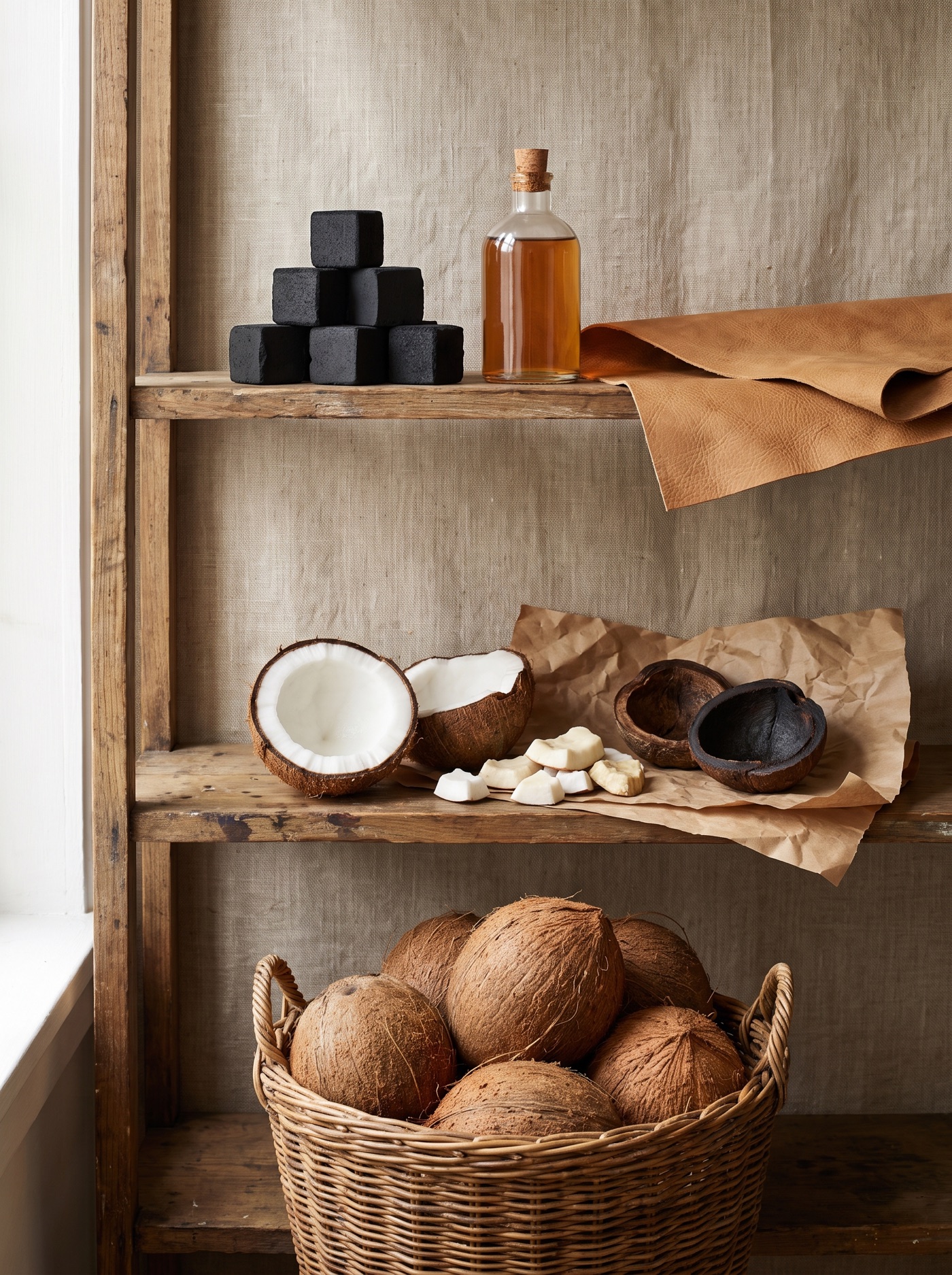
Carbon & ESG

Biomass energy at the source

Our kilns and dryers run on coconut husk — biomass that local copra makers traditionally burn as waste. The residue of one product powers the next, at the workshop where both are made.

Fuel that leaves forests standing

Kora charcoal is made from shell, the residue of a food crop. Every ton that replaces wood charcoal is a ton no forest was cut for — and the palms it came from keep producing.

Biogenic carbon, made by pyrolysis

The carbon in shell and husk was absorbed from the air by a living palm, not dug from the ground — and every workshop chars it by pyrolysis, the same process behind biochar. The palms keep standing, sequestering carbon for decades.

For reporting supply chains

Our in-house software records every lot from the farmer and supplier we bought from to the buyer we shipped to. Inputs are agricultural residues, process energy is biomass — and we are building the data to quantify this footprint against your framework.

For companies with ESG commitments

We are building toward registry-certified carbon removal from our own pyrolysis char, applied where it is made. Char and residues are already available as a soil-amendment product — early partners can shape the credit program and secure future offtake.

Start an ESG conversation

Who we are

From Indonesia's coconut belt to global markets.

"Why should Indonesia's coconuts leave the country as raw commodity?"

Kora began with that question. We work directly with coconut-producing communities to secure raw material, then take a whole-coconut approach to what we make from it: shell becomes charcoal and briquettes, kernel becomes copra, and the coconut stream also yields our vinegar and bioleather lines, each taken to its highest-value use across our four workshops in Java and Sulawesi.

One company, our own workshops. We supply Indonesian-origin products to consistent specifications for export and domestic buyers — and keep more of the coconut's value close to where it is grown.

PT Kora Prima Abadi · Bogor, Jawa Barat, Indonesia

Start an inquiry

Tell us product, volume, destination

Send product, target volume, destination port and Incoterm preference. We acknowledge within two business days. Your quotation follows once production capacity in our workshops is confirmed for your specification.

What to include

  • Product and grade
  • Target volume
  • Destination port
  • Incoterm preference